Sorting Fact From Fear: A Westchester Parent's Guide to Childhood Vaccines and Informed Decision-Making
Parenting in the digital age comes with a paradox: more information than ever before, and less certainty about what to trust. For many Westchester families, questions about childhood vaccinations sit squarely at the center of that tension. A neighbor shares a documentary on social media. A well-meaning relative forwards a link. A parenting forum erupts into debate. Before long, a routine pediatric appointment can feel like walking into a minefield.
At Children of Our Savior Westchester, we believe that informed parents are empowered parents. That means approaching the vaccination conversation not with judgment, but with clarity — offering the tools families need to evaluate information honestly and advocate effectively for their children's health.
Why Vaccine Hesitancy Has Grown — and Why It Matters
Vaccine hesitancy is not new, but it has accelerated significantly in the age of social media. The World Health Organization identified it as one of the top ten threats to global health, and Westchester County health officials have noted its presence locally, particularly following the measles outbreaks that affected the greater New York region in recent years.
Hesitancy exists on a spectrum. Some parents have minor concerns they simply want addressed. Others have deeply held reservations shaped by personal experience, cultural background, or religious belief. Still others have encountered persuasive but misleading content online that has genuinely unsettled their confidence in the medical establishment. None of these positions make a parent irresponsible — they make them human.
What matters is how families navigate that uncertainty. Delayed or skipped vaccinations do carry measurable public health consequences, particularly for children who are too young to be vaccinated, immunocompromised, or otherwise medically vulnerable. When immunization rates fall below the threshold needed for community immunity, diseases that were once considered controlled — measles, whooping cough, and others — can re-emerge with serious consequences.
Understanding the Evidence: What Vaccines Actually Do
The childhood immunization schedule recommended by the Centers for Disease Control and Prevention (CDC) and the American Academy of Pediatrics (AAP) is the product of decades of rigorous scientific research and ongoing safety monitoring. Vaccines work by training the immune system to recognize and respond to specific pathogens without causing the disease itself.
Common concerns worth addressing directly:
Are vaccines tested for safety? Yes — extensively. Before any vaccine is approved for use, it undergoes multiple phases of clinical trials involving thousands of participants. After approval, vaccines continue to be monitored through national surveillance systems including the Vaccine Adverse Event Reporting System (VAERS) and the Vaccine Safety Datalink.
Do vaccines cause autism? This claim originated from a 1998 study that has since been thoroughly discredited and retracted due to serious ethical violations and data manipulation. Dozens of large-scale studies involving millions of children across multiple countries have found no connection between vaccines and autism spectrum disorder.
Can my child receive too many vaccines at once? The immune system is remarkably capable. Research shows that combination vaccines and simultaneous administration are safe and do not overwhelm a child's immune response. Spacing out vaccines unnecessarily can leave children vulnerable during the gaps.
Are vaccine ingredients dangerous? Ingredients such as adjuvants and preservatives are present in trace amounts carefully calibrated for safety. The quantities involved are far below thresholds that would cause harm, and many ingredients — including formaldehyde — occur naturally in the human body at higher concentrations than those found in vaccines.
Identifying Reliable Health Information Online
Not all health content is created equal, and distinguishing credible sources from misleading ones requires a practiced eye. Here are practical criteria Westchester parents can apply when evaluating vaccine-related information:
- Check the source. Trusted organizations include the CDC (cdc.gov), the AAP (healthychildren.org), the World Health Organization (who.int), and the Westchester County Department of Health. Peer-reviewed journals such as Pediatrics and The Lancet are also reliable.
- Look for citations. Credible health content references specific studies, clinical data, or institutional guidelines. Vague appeals to "research" or "experts" without named sources should raise caution.
- Be wary of emotional framing. Content designed to provoke fear, outrage, or urgency is often optimized for engagement rather than accuracy. Measured, nuanced language is generally a better sign.
- Evaluate the author's credentials. Medical advice carries more weight when it comes from licensed practitioners or credentialed researchers. Anonymous blog posts and influencer testimonials are not equivalent to peer-reviewed evidence.
- Consider the platform's incentives. Social media algorithms reward content that generates strong reactions, not content that is accurate. A post going viral does not make it true.
Having Productive Conversations With Your Pediatrician
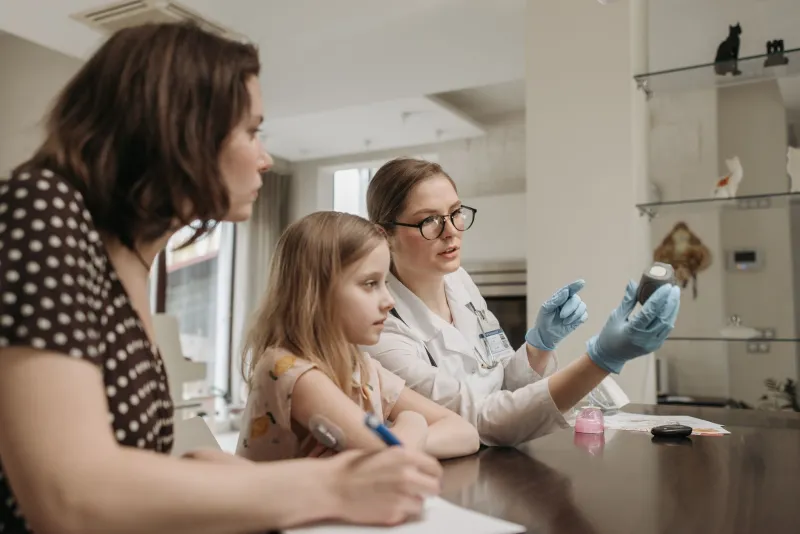
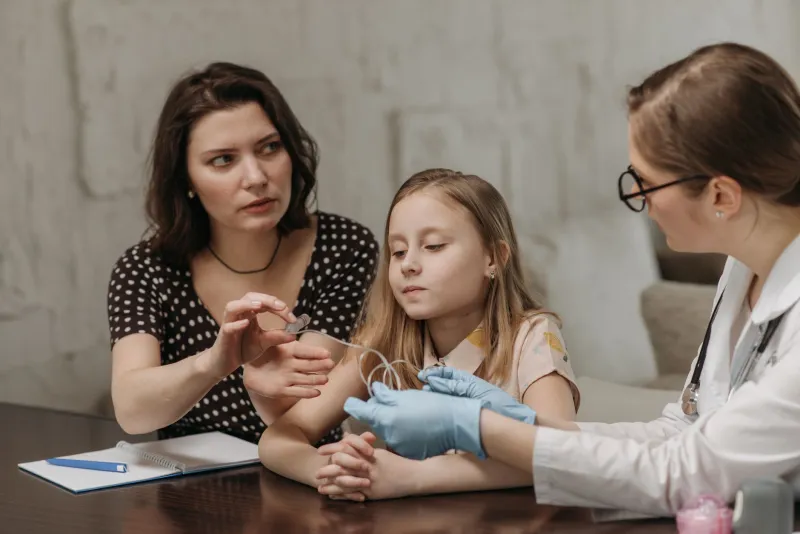
Many parents hesitate to raise vaccine concerns with their child's doctor out of fear of being dismissed or judged. A good pediatric provider will welcome your questions — and if yours does not, that itself is useful information.
Before your appointment, write down your specific concerns. Vague anxiety is harder to address than a concrete question. Ask your doctor to walk you through the recommended schedule and explain the purpose of each vaccine. Request information about the risks of the diseases being prevented, not just the risks of the vaccines themselves — understanding what you are protecting your child against is just as important as understanding the intervention.
If you have encountered specific claims online that concern you, bring them up directly. A pediatrician who can engage thoughtfully with misinformation is a valuable partner. You might also ask your provider about the Vaccine Information Statements (VIS) that are legally required to be distributed before each vaccination — these documents offer straightforward, federally mandated summaries of benefits and risks.
Navigating Family Disagreements About Vaccines
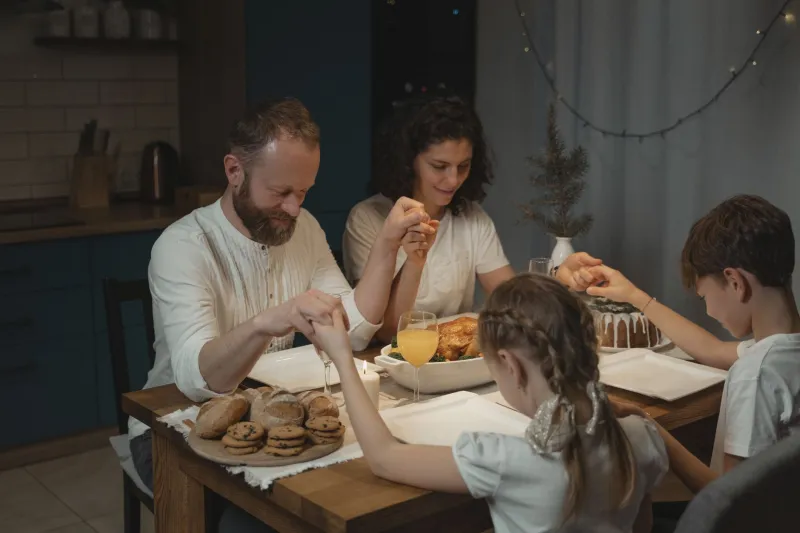
For many Westchester families, the hardest conversations are not with doctors — they are with grandparents, in-laws, or close friends who hold strong opposing views. These exchanges can strain relationships and leave parents feeling caught between competing loyalties.
A few approaches that can help:
- Lead with shared values. Most people on both sides of this conversation want the same thing: healthy children. Grounding the discussion in that common ground can lower the temperature.
- Avoid debating in the moment. When emotions are high, facts rarely land well. It is acceptable to say, "I've thought about this carefully and talked to our pediatrician, and this is the decision we've made for our family."
- Set boundaries respectfully. If a family member is unvaccinated and your child is an infant or immunocompromised, it is reasonable — and medically appropriate — to establish contact guidelines. Frame this as a health precaution, not a personal rejection.
- Share information gently, not aggressively. Sending a trusted article or a link to a respected organization can plant a seed without triggering defensiveness.
A Note on Compassion and Community
At Children of Our Savior Westchester, we recognize that every family's path to health decisions is shaped by unique circumstances — cultural history, past experiences with the medical system, access to reliable information, and deeply held values. Our mission is to support families across Westchester without judgment, offering resources and guidance that meet people where they are.
Vaccination is one of the most effective tools modern medicine has developed to protect children from serious illness. For most families, the evidence in its favor is compelling. But the path to that confidence must be walked freely, with access to honest information and respectful conversation. We hope this guide serves as a useful step along that path.
For additional resources, parents are encouraged to contact the Westchester County Department of Health or speak directly with their child's pediatric provider. You do not have to navigate these questions alone.