Hunger Behind Closed Doors: Understanding and Addressing Food Insecurity Among Westchester's Children
The Quiet Crisis Hiding in Plain Sight
Westchester County carries a well-earned reputation for tree-lined suburbs, strong school districts, and relative economic comfort. Yet beneath that surface, a significant number of families are quietly struggling to put consistent, nutritious meals on the table. According to Feeding America and local county data, an estimated one in eight children in Westchester experiences food insecurity at some point during the year—a figure that surprises many residents who assume the problem belongs to other communities.
Food insecurity does not always look like what people imagine. It rarely means a family has nothing to eat. More often, it means parents are skipping meals so their children can eat, relying heavily on low-nutrient processed foods because fresh produce is unaffordable, or quietly dreading the weekend when school meal programs are unavailable. These families live on the margins of financial stability—a medical bill, a job loss, or a rent increase away from a genuine crisis.
At Children of Our Savior Westchester, we believe that understanding the true shape of this problem is the first step toward addressing it with both compassion and effectiveness.
How Hunger Affects Children's Health and Development
The consequences of food insecurity in childhood are not limited to physical hunger. Research consistently demonstrates that children who experience inconsistent access to nutritious food face measurable disadvantages across multiple dimensions of health and development.
Physical health is the most immediately visible concern. Children who lack adequate nutrition are more susceptible to illness, recover more slowly, and are more likely to experience developmental delays. Iron deficiency, in particular, is common among food-insecure children and is directly linked to fatigue, weakened immunity, and impaired growth.
Cognitive development and academic performance are also significantly affected. Studies published in journals such as Pediatrics have found that food-insecure children demonstrate lower scores in reading and mathematics, struggle more with concentration, and are more likely to be absent from school. A child who arrives at school hungry is neurologically disadvantaged before the first lesson begins.
Emotional and behavioral well-being rounds out the picture. Children in food-insecure households are at elevated risk for anxiety, depression, and behavioral challenges. The stress of household food instability—even when partially shielded from children by parents—creates a chronic low-grade tension that affects mood regulation, social relationships, and self-esteem.
For families of faith, this reality carries particular weight. Ensuring that children are fed is not merely a policy matter; it is a moral imperative rooted in the belief that every child deserves dignity and the conditions necessary to flourish.
Why Families Stay Silent—and Why That Silence Matters
One of the most significant barriers to addressing food insecurity in a community like Westchester is shame. Families who once considered themselves comfortably middle class—and who may still appear so to neighbors—often find it extraordinarily difficult to acknowledge that they are struggling to afford groceries.
Immigrant families face an additional layer of complexity, with concerns about immigration status sometimes discouraging participation in federal nutrition programs even when families are fully eligible. Single parents managing multiple jobs may lack the time to navigate application processes. And families in suburban communities may simply not know where to look, assuming that food pantries and assistance programs are designed for urban environments.
This silence is costly. Children whose families do not access available resources continue to bear the physical, cognitive, and emotional burden of inadequate nutrition—burdens that compound over time and are far more difficult to address once they become entrenched.
Local Resources Westchester Families Should Know
Westchester County has a meaningful network of organizations dedicated to combating food insecurity. Families in need—and neighbors who wish to help—should be aware of the following:
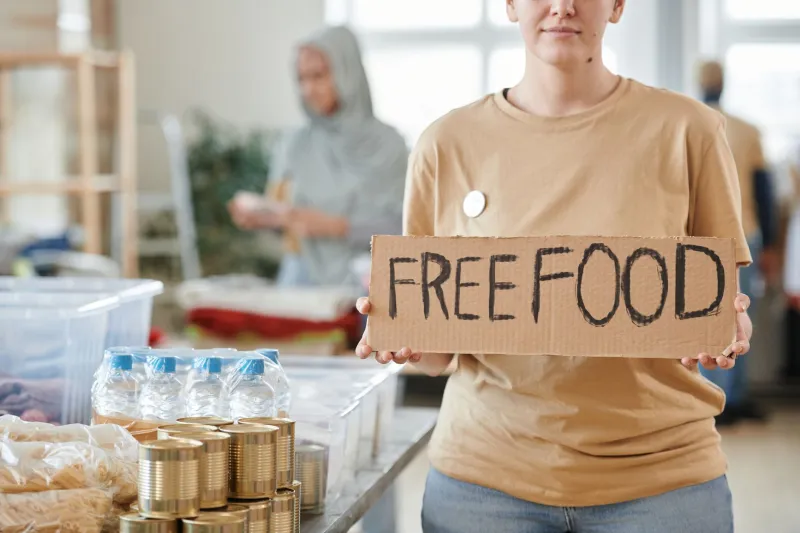
Food Bank for Westchester operates as the county's primary food distribution hub, supplying more than 300 partner agencies including food pantries, soup kitchens, and emergency shelters. Their website provides a searchable directory of local distribution sites.
Westchester County Department of Social Services administers the Supplemental Nutrition Assistance Program (SNAP), formerly known as food stamps. Many families who qualify for SNAP have not applied. The application process is available online, and eligibility thresholds are broader than many residents realize.
School-based meal programs remain one of the most effective interventions available. The National School Lunch Program and School Breakfast Program provide free and reduced-price meals to qualifying students throughout the county. Families uncertain about eligibility are encouraged to apply—many are surprised to find they qualify.
Community-based pantries and faith organizations, including those affiliated with local parishes and community centers, operate throughout the county and frequently offer food assistance without documentation requirements or income verification, making them accessible to families in acute need.
Summer meal programs through the USDA's Summer Food Service Program provide free meals to children 18 and under at sites throughout Westchester during the school break—a critical resource given that food insecurity often intensifies when school meal programs are unavailable.
Practical Steps for Families Seeking Help
If your family is experiencing food insecurity, please know that seeking help is not a failure—it is an act of care for your children. The following steps can help you access support more quickly:
- Contact 211: Dialing 2-1-1 connects Westchester residents to a comprehensive directory of local social services, including food assistance programs, without any obligation.
- Speak with your child's school counselor or social worker: Schools are often the first point of contact for families in need and can connect you with resources discreetly.
- Visit the Food Bank for Westchester's website to locate the nearest food pantry or distribution site.
- Apply for SNAP online through the New York State Office of Temporary and Disability Assistance website—the process takes approximately 30 minutes and can be completed from home.
How Our Community Can Help
Addressing food insecurity is not solely the responsibility of those who experience it. Neighbors, faith communities, and local organizations all have a role to play in reducing both the practical burden and the social stigma that surrounds this issue.
Consider volunteering with or donating to the Food Bank for Westchester or a local food pantry. Advocate within your child's school for robust participation in federal meal programs. Speak openly and without judgment about food insecurity so that families in your circle feel less isolated in their struggles.
Perhaps most importantly, resist the assumption that prosperity and need are mutually exclusive. In a county as economically diverse as Westchester, hunger exists in neighborhoods that do not look like they should have a problem—and that invisibility is precisely what makes the issue so persistent.
A Community Rooted in Care
At Children of Our Savior Westchester, our commitment is to the whole child—body, mind, and spirit. Adequate nutrition is not a luxury; it is the foundation upon which every other aspect of a child's health and development rests. When children are fed, they learn better, feel better, and grow into the people they are meant to become.
If your family needs support, we encourage you to reach out. If your family is in a position to give, we encourage you to do so generously. Together, we can ensure that no child in our community goes to school hungry, goes to bed hungry, or grows up believing that their needs do not matter.
Every child deserves a full plate—and a community that stands ready to provide one.