Living With More Than Childhood: How Westchester Families Navigate Life When a Child Has a Chronic Condition
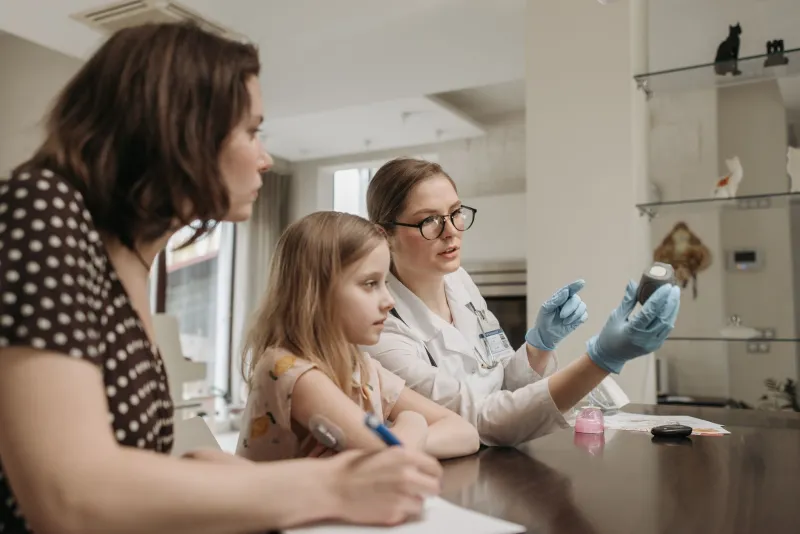
For many parents in Westchester County, the school morning routine involves more than packed lunches and permission slips. It may include checking blood glucose levels, administering an inhaler, reviewing a 504 plan with a teacher, or making sure a medical alert bracelet is fastened before the bus arrives. These are the quiet, unremarkable rituals of families raising children with chronic illness — routines born not from choice, but from necessity.
According to the Centers for Disease Control and Prevention, approximately one in four children in the United States lives with a chronic health condition. In a county as densely populated and economically diverse as Westchester, that statistic translates into tens of thousands of children whose lives are shaped daily by conditions such as asthma, Type 1 diabetes, juvenile idiopathic arthritis, epilepsy, inflammatory bowel disease, and others. The medical facts alone tell only part of the story. The fuller picture — the one that families live inside — is far more complex.
The Weight That Doesn't Show
One of the most isolating aspects of childhood chronic illness is its invisibility. A child with well-managed asthma may look perfectly healthy during recess, only to spend the following night in acute respiratory distress. A child with juvenile arthritis may participate enthusiastically in class on Monday and miss two days of school by Wednesday because of a flare. This unpredictability creates a particular kind of stress for parents, who must constantly balance vigilance with the desire to give their child as normal a childhood as possible.
Families often describe a grief process — not for the loss of a child, but for the loss of an imagined childhood. The spontaneous camping trip becomes a logistical exercise. The birthday cake becomes a conversation about carbohydrate counts. These adjustments, made lovingly and without complaint, nonetheless carry emotional weight that many parents carry quietly and alone.
Siblings are affected as well. Brothers and sisters of children with chronic conditions frequently report feeling overlooked, guilty for being healthy, or resentful of the attention their sibling's medical needs require. Acknowledging these dynamics openly within the family — and seeking support when needed — is not a sign of weakness. It is an act of care for the entire household.
School as a Second Battleground
For children with chronic illness, the school environment presents a distinct set of challenges. Absences accumulate. Academic gaps emerge. Social dynamics shift when a child is frequently absent, visibly different in their routines, or managing medical equipment at the lunch table.
Westchester parents have the right to request formal accommodations for their child through either an Individualized Education Program (IEP) or a Section 504 plan under federal law. A 504 plan, in particular, is well-suited to children whose primary needs are medical rather than academic. It can authorize accommodations such as unrestricted bathroom access, permission to carry medication, flexible attendance policies, and designated rest periods.
Advocating effectively in this space requires preparation. Before meeting with school administrators, parents should gather current medical documentation from their child's physician, outline specific accommodations with clear rationale, and consider bringing a patient advocate or social worker if they anticipate resistance. New York State law requires schools to have a registered nurse available during school hours, and parents should establish a clear communication protocol with that nurse at the start of every school year.
It is equally important to speak with classroom teachers directly. A brief, factual conversation about a child's condition — what it looks like on a difficult day, what the child may need, what language to use or avoid — can transform how a child is treated in the classroom. Most teachers want to help; they simply need information.
Managing the Medical Maze
Caring for a child with a chronic condition frequently means managing a team of specialists, coordinating appointments across multiple facilities, and navigating insurance systems that were not designed with families in mind. In Westchester, families have access to several major health systems, including NewYork-Presbyterian, Westchester Medical Center, and White Plains Hospital, each with pediatric specialty programs. However, access is not uniform, and the administrative burden of coordinating care can become a part-time job.
A few practical strategies can reduce that burden meaningfully:
Centralize your records. Maintain a single, organized folder — physical or digital — containing your child's diagnoses, current medications, specialist contacts, insurance information, and prior authorization history. Apps such as MyChart, offered through many Westchester health systems, can help consolidate records digitally.
Request a care coordinator. Many pediatric specialty practices and insurance plans offer care coordination services at no additional cost. A care coordinator can help schedule appointments, manage referrals, and navigate prior authorization disputes on your behalf.
Know your appeal rights. If your insurer denies coverage for a medication, procedure, or specialist visit, you have the right to appeal that decision. New York State's Department of Financial Services provides a free external appeal process for denied claims. Do not accept the first denial as final.
Ask about financial assistance programs. Many pharmaceutical manufacturers offer patient assistance programs for expensive medications. Hospital systems frequently have financial counselors who can identify sliding-scale fees, charity care programs, or community health funds that may apply to your family's situation.
Nurturing Your Child's Emotional World
Beyond the physical management of illness, children with chronic conditions face real psychological challenges. Studies consistently show elevated rates of anxiety and depression among children managing long-term health conditions, particularly during adolescence when identity formation and peer belonging are paramount concerns.
Parents can support their child's emotional health by maintaining honest, age-appropriate conversations about the condition — neither minimizing its reality nor allowing it to become the defining feature of the child's identity. Encourage your child to pursue interests and friendships that have nothing to do with their diagnosis. Help them develop language to explain their condition to peers in a way that feels comfortable rather than clinical.
When anxiety or depression appears, professional support should be sought without hesitation. Westchester offers a range of pediatric mental health providers, and many children's hospitals have integrated behavioral health programs specifically designed for youth managing chronic illness. At Children of Our Savior Westchester, we believe that emotional care is as essential as physical care — the two are never truly separate.
You Are Not Walking This Road Alone
The families we serve at Children of Our Savior Westchester remind us regularly that the most powerful resource available to parents of children with chronic illness is community. Connecting with other families who understand the particular rhythms of this life — the 2 a.m. blood sugar checks, the IEP meetings, the canceled plans — can reduce isolation and provide practical wisdom that no medical textbook contains.
Local and national organizations offer condition-specific support groups, advocacy training, and family programming. The American Diabetes Association, the Arthritis Foundation, and the Asthma and Allergy Foundation of America all maintain regional chapters with resources for Westchester families. Online communities, while not a substitute for professional care, can also provide meaningful connection and peer support.
Raising a child with a chronic condition demands extraordinary reserves of patience, creativity, and love. It also demands support — from schools, from healthcare systems, from communities of faith, and from organizations committed to the whole child and the whole family. That commitment is at the heart of everything we do, and it is extended, without reservation, to every family in Westchester who is carrying more than most people see.