When the World Feels Too Loud: Helping Westchester Children with Sensory Processing Differences Find Their Footing

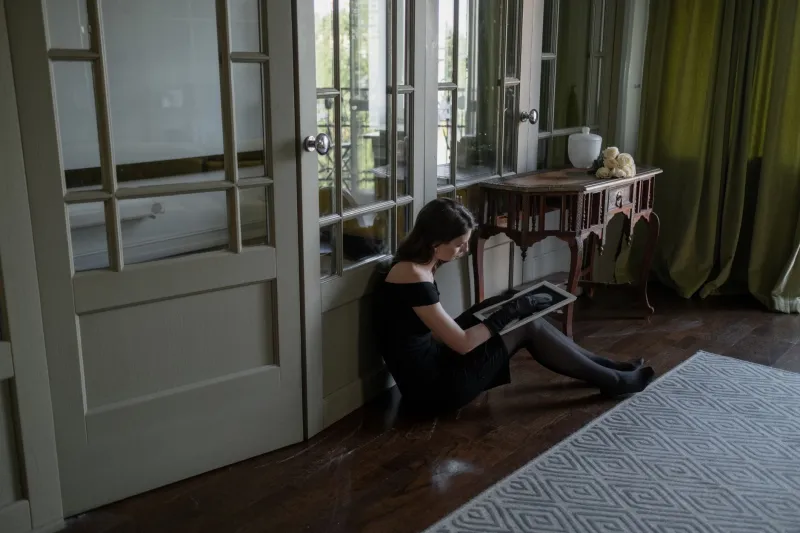
Photo: Luis Miguel Bugallo Sánchez (Lmbuga Commons)(Lmbuga Galipedia) Publicada por/Publish by: Luis Miguel Bugallo Sánchez, Public domain, via Wikimedia Commons
Imagine trying to concentrate on a math lesson while every sound in the room — a pencil tapping, a chair scraping, a classmate whispering — registers at the same volume as a fire alarm. For many children across Westchester and beyond, this is not an exaggeration. It is their daily reality.
Sensory processing differences affect the way a child's brain receives, organizes, and responds to information from the environment. These are not behavioral problems, nor are they simply a matter of being "sensitive" or "dramatic." They represent genuine neurological variations that can shape nearly every aspect of a child's life — from how well they sleep to how confidently they walk into a birthday party.
At Children of Our Savior Westchester, we believe that every child deserves to be understood before they are corrected. That begins with families having the knowledge to recognize what they are seeing.
What Sensory Processing Differences Actually Look Like
Sensory processing differences do not present the same way in every child. Some children are hypersensitive, meaning their nervous systems respond with heightened intensity to stimuli that most people barely notice. Others are hyposensitive, appearing to seek out intense sensory input — crashing into furniture, touching everything within reach, or speaking at a volume that seems out of proportion to the situation.
Common signs that a child may be experiencing sensory processing challenges include:
- Extreme reactions to clothing textures, such as refusing to wear anything with tags, seams, or certain fabrics
- Meltdowns in loud or crowded environments, including school hallways, grocery stores, or family gatherings
- Unusual sensitivity to food textures, going far beyond ordinary picky eating
- Difficulty tolerating unexpected touch, such as a classmate accidentally brushing their arm
- Seeking out intense physical sensations, like spinning, jumping, or pressing into tight spaces
- Becoming easily overwhelmed by bright lights or strong smells
- Struggling to transition between activities, particularly when the environment changes
It is worth noting that many of these behaviors are sometimes dismissed as defiance, immaturity, or anxiety. While there can be overlap with other developmental concerns, sensory processing differences are a distinct experience that warrants its own understanding and response.
How Sensory Challenges Differ from Other Developmental Concerns
Parents are often understandably confused when trying to distinguish sensory processing differences from conditions such as ADHD, autism spectrum disorder, or anxiety. The reality is that these conditions can and frequently do coexist. However, sensory processing differences can also occur entirely independently.
A child with ADHD may struggle to focus due to difficulty regulating attention. A child with sensory processing differences may struggle to focus because the physical environment is genuinely overwhelming their nervous system before they even open a textbook. Both deserve support — but the support they need may look quite different.
If you are uncertain whether your child's behaviors stem from sensory processing differences or another underlying concern, a developmental pediatrician or a licensed occupational therapist with sensory integration training can provide meaningful clarity. Westchester families have access to a number of qualified specialists through local pediatric practices, school-based services, and community health organizations.
Practical Strategies for Home
While professional evaluation is valuable, there is a great deal that families can do at home to reduce daily distress and build a more supportive environment.
Create predictable routines. Children with sensory differences often find unpredictability particularly destabilizing. Consistent morning and evening routines, advance notice of schedule changes, and clear transitions between activities can significantly reduce anxiety and meltdown frequency.
Designate a calm-down space. This is not a punishment corner — it is a deliberate retreat. A quiet area with soft lighting, weighted blankets, noise-canceling headphones, or textured fidget tools gives a child a place to regulate when their nervous system becomes overloaded. Many families in Westchester have found success transforming a small closet, a reading nook, or even a corner of a bedroom into this kind of refuge.
Adjust clothing and mealtime when possible. Removing tags from clothing, offering seamless socks, and allowing flexibility in what textures a child eats at meals can prevent unnecessary power struggles and reduce daily sensory stress. These are small accommodations with meaningful impact.
Use sensory-rich movement breaks. Physical activity that involves heavy muscle work — carrying a backpack, doing wall push-ups, jumping on a trampoline — can help regulate the nervous system before demanding tasks. Many occupational therapists refer to this as a "sensory diet," and it can be incorporated naturally into a child's day.
Partnering with Schools
The school environment presents some of the greatest sensory challenges for affected children. Cafeterias, gymnasium assemblies, fluorescent-lit classrooms, and crowded hallways can all create significant distress. The good news is that schools are increasingly equipped — and legally obligated — to support children with documented sensory needs.
Parents can advocate for their child by:
- Requesting an occupational therapy evaluation through the school district if sensory challenges are affecting academic performance or social participation
- Asking about accommodations such as preferential seating away from high-traffic areas, permission to wear headphones during independent work, or access to a quiet space during unstructured periods like lunch
- Collaborating with teachers to share what strategies work at home, so they can be adapted in the classroom
- Pursuing a 504 Plan or IEP if sensory processing differences are significantly impacting a child's ability to access their education
New York State schools are required to evaluate children suspected of having disabilities that affect their education. If your child's sensory challenges are interfering with learning, you have the right to request this process in writing.
The Emotional Weight Carried by These Children
Beyond the practical strategies, it is important for parents to recognize the emotional toll that sensory processing differences can take on a child. Many of these children spend years being told they are overreacting, being too much, or simply not trying hard enough. The cumulative effect of feeling misunderstood — by teachers, peers, and sometimes family members — can erode self-esteem in ways that persist well into adolescence.
Validating a child's experience is not the same as excusing behavior. Saying "I know that noise really bothers you — let's figure out how to help" communicates both belief and partnership. It is a message that tells a child they are not broken. They simply experience the world differently, and the people who love them are willing to meet them where they are.
Moving Forward with Compassion and Clarity
Sensory processing differences are not a phase children simply grow out of, though many do develop stronger coping strategies over time with the right support. Early identification, thoughtful accommodation, and consistent advocacy from informed parents can dramatically alter the trajectory of a child's experience.
At Children of Our Savior Westchester, our commitment is to ensure that no child in our community is left to navigate their challenges alone — and that no family is left searching for answers without guidance. If you suspect your child may be experiencing sensory processing differences, speak with your pediatrician as a first step, and ask for a referral to an occupational therapist with sensory integration expertise.
Your child's world may feel overwhelming right now. With the right tools and the right support, it does not have to stay that way.