Is Your Child Truly Listening? How Westchester Parents Can Spot Hearing Loss Before It Falls Through the Cracks
When "Not Listening" Means Something More
Every parent has uttered some version of the phrase: "I've told you three times already—are you even listening?" For most children, the answer is simply that something more interesting has captured their attention. But for a meaningful number of Westchester families, that moment of frustration may be pointing toward something that deserves closer attention: an undetected hearing problem.
According to the Centers for Disease Control and Prevention, approximately 1 to 3 out of every 1,000 newborns in the United States are born with a detectable level of hearing loss. Yet hearing difficulties are not limited to infancy. Hearing loss can develop gradually during childhood as a result of chronic ear infections, noise exposure, illness, or structural changes—and because the decline is often slow, both children and their caregivers may not recognize it until significant developmental ground has already been lost.
At Children of Our Savior Westchester, we understand that families are doing their very best to keep up with busy lives while remaining attentive to their children's health. Our goal is to equip parents with the knowledge they need to recognize when something may be wrong—and to feel confident taking the next step.
The Warning Signs That Are Easy to Miss
Unlike a visible injury or a fever, hearing loss rarely announces itself clearly. Instead, it tends to surface through patterns of behavior that are easy to attribute to other causes. The following signs warrant a conversation with your child's pediatrician.
In infants and toddlers:
- Failing to startle at loud or sudden sounds
- Not turning toward the source of a voice or noise by four to six months of age
- Limited babbling or a noticeable decrease in vocalizations after six months
- Not responding to their own name by the time they reach their first birthday
- Showing little interest in simple verbal games or songs
In preschool-aged children:
- Speech that is significantly harder to understand than peers of the same age
- Frequently asking for repetition or responding with "huh?" and "what?"
- Watching a speaker's face intently, as though lip-reading
- Turning the television volume to levels that seem excessive
- Appearing confused or unresponsive in noisy environments, such as a crowded classroom or playground
In school-aged children:
- Difficulty following multi-step instructions, especially when the speaker is not in direct view
- Declining academic performance, particularly in subjects that rely heavily on verbal instruction
- Withdrawing from group conversations or social activities
- Complaining of ringing or buzzing in the ears
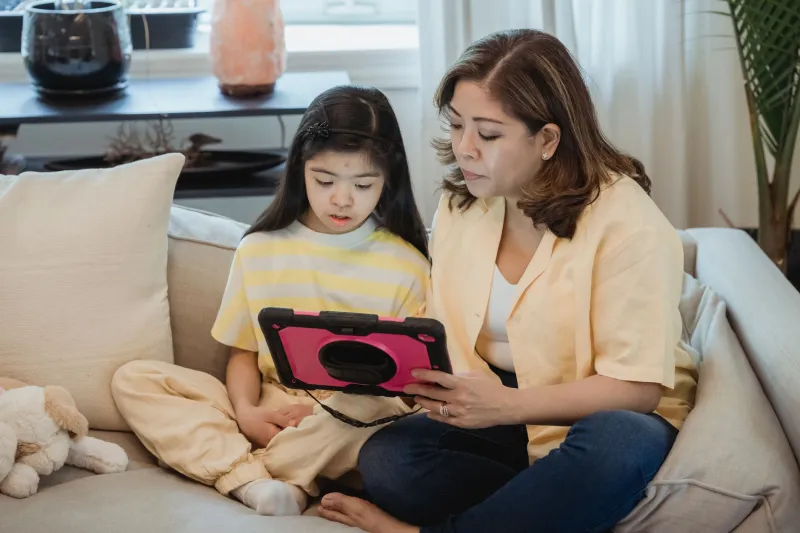
- Appearing inattentive or distracted—symptoms that may lead to an incorrect diagnosis of ADHD
That last point deserves particular emphasis. Research has documented cases in which children were evaluated—and sometimes treated—for attention disorders before an underlying hearing impairment was identified. A child who cannot clearly hear their teacher is not choosing to be inattentive; they are doing their best to navigate a classroom where the primary mode of communication is partially inaccessible to them.
Why Early Detection Changes Everything
The first several years of life represent a critical window for language acquisition and cognitive development. The brain is remarkably receptive during this period, and children who receive appropriate hearing support early are significantly more likely to develop age-appropriate speech, language, and social skills.
Conversely, when hearing loss goes unaddressed, the consequences can accumulate quietly over time. Children may struggle to build vocabulary at the expected pace, find reading comprehension more difficult, and feel increasingly isolated from their peers. By the time a diagnosis is finally made, some families are not only managing a medical condition—they are also working to rebuild a child's academic confidence and sense of belonging.
For Westchester families, the good news is that the region is home to a robust network of pediatric audiologists, speech-language pathologists, and early intervention programs that are equipped to support children across a wide spectrum of hearing needs.
What to Expect From a Hearing Evaluation
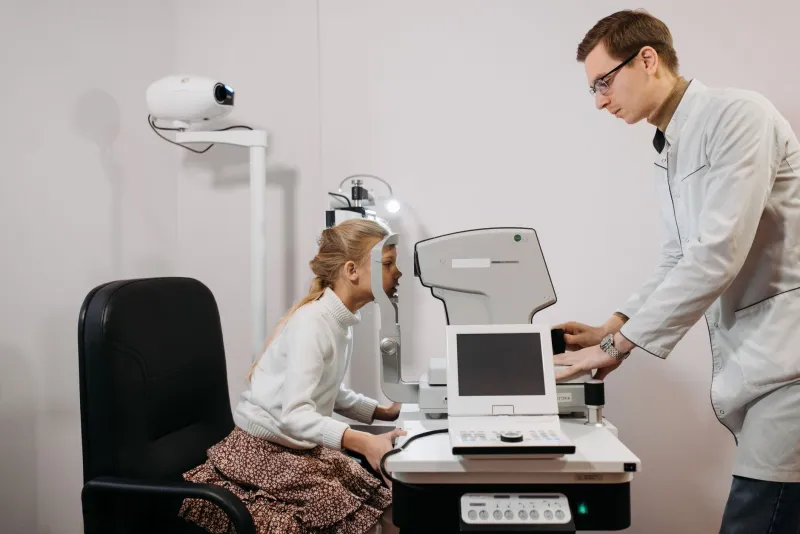
If you suspect your child may have difficulty hearing, the first step is to raise your concerns with your pediatrician at your next well-child visit—or sooner, if the signs feel urgent. Pediatricians can conduct a basic screening and, when appropriate, provide a referral to a licensed audiologist for a comprehensive evaluation.
For parents unfamiliar with the process, the idea of an audiological assessment can feel daunting. In practice, however, these evaluations are designed to be age-appropriate and entirely non-invasive. For infants and very young children, audiologists use techniques that do not require any active participation from the child, measuring the ear's response to sound through specialized equipment. Older children may be asked to respond to tones played through headphones or to repeat words at varying volumes.
A comprehensive evaluation will typically assess:
- The degree of hearing loss, if any is present
- Whether the loss affects one ear or both
- The type of hearing loss (conductive, sensorineural, or mixed)
- How hearing ability may be affecting speech and language development
Results are explained clearly to families, and audiologists will discuss the range of options available—which may include hearing aids, medical treatment for underlying ear conditions, assistive listening devices for the classroom, or referral to a specialist for further evaluation.
Navigating Next Steps as a Family
A new diagnosis can feel overwhelming, and it is entirely natural for parents to experience a mix of emotions—relief at finally having an explanation, concern about what lies ahead, and uncertainty about how to advocate effectively for their child. A few practical suggestions may help.
Communicate with your child's school. Under federal law, children with identified hearing loss are entitled to accommodations and services through their school district. This may include preferential seating, an FM system that transmits the teacher's voice directly to a hearing device, or a formal Individualized Education Program (IEP). Parents have the right to request an evaluation through their school district at no cost.
Connect with other families. Organizations such as the Hearing Loss Association of America offer peer support networks where parents can share experiences, resources, and practical advice.
Involve your child in the conversation. Depending on their age, children benefit enormously from understanding their own hearing needs and learning to self-advocate—whether that means asking a teacher to repeat something or telling a friend why they prefer sitting in certain spots.
Follow up consistently. Hearing can change over time, and regular monitoring ensures that interventions remain appropriately calibrated as your child grows.
A Final Word to Westchester Families
Children cannot always tell us what they cannot hear. They adapt, they compensate, and they sometimes struggle in silence. As the adults in their lives, we carry the responsibility of paying close attention—not only to what children say, but to what their behavior may be communicating beneath the surface.
If something feels off, trust that instinct. Seeking an evaluation costs nothing except a little time, and the potential benefit to your child's development, confidence, and quality of life is immeasurable. At Children of Our Savior Westchester, we believe that every child deserves to move through the world with full access to the voices, the learning, and the connections that shape who they become.