Left Out and Looking In: Understanding Why Some Children Struggle to Form Real Friendships — and What Westchester Parents Can Do About It

Photo by Photo by Jeffrey Zhang on Unsplash on Unsplash
When Social Skills Aren't Enough
Most parents instinctively know when something is off. Their child comes home quiet after school. Invitations stop arriving. Weekend plans go unmentioned because there are none. Yet when they observe their son or daughter in a social setting, the child seems perfectly capable — making eye contact, responding appropriately, even laughing at the right moments.
So why does the friendship never quite take hold?
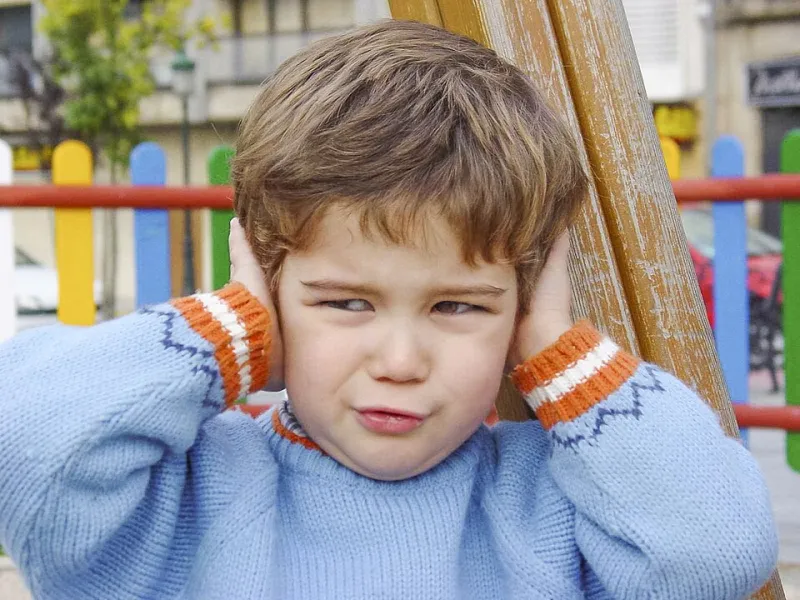
This is one of the quieter struggles of childhood, and it affects a meaningful number of children across Westchester County. Unlike the more visible signs of social difficulty — the child who melts down at a playdate or refuses to speak to peers — these children occupy a more ambiguous space. They are present in social situations but not quite connected to them. They participate without truly belonging.
For parents, that ambiguity can make the problem harder to address. But understanding what is actually driving the gap is where real support begins.
The Reasons Go Deeper Than Shyness
It is tempting to reduce social difficulty to personality — some children are simply more introverted, we tell ourselves. While temperament does play a role, the reasons children struggle to form meaningful peer connections are far more varied and, in many cases, far more specific.
Neurodivergence that hasn't been identified. Children on the autism spectrum, or those with ADHD, often develop what specialists call a compensatory social mask — a learned set of behaviors that allow them to appear socially fluent in structured settings while still missing the subtler, unspoken rhythms of peer interaction. These children may not yet have a diagnosis, and their parents may not yet have a framework for understanding why connection feels so elusive.
Social anxiety operating beneath the surface. Anxiety does not always look like avoidance. Some anxious children push themselves into social situations but are so preoccupied with saying the wrong thing, being judged, or being rejected that they cannot be genuinely present. Friendships require a degree of emotional availability, and anxiety quietly consumes that resource.
Mismatched interests in a peer environment. A ten-year-old in Westchester who is deeply passionate about ornithology or 19th-century history may be socially capable in every clinical sense while still finding it genuinely difficult to connect with peers whose interests revolve around sports teams or popular media. The problem is not a deficit — it is a mismatch. And that distinction matters enormously when deciding how to help.
Uneven emotional development. Some children mature intellectually well ahead of their social and emotional development, or vice versa. A child who reasons like a teenager but reacts emotionally like a much younger child may find that neither age group feels like a natural fit.
Past experiences of rejection or exclusion. Children who have been bullied, left out, or socially humiliated — even once, even years ago — sometimes develop a protective guardedness that reads to peers as aloofness or disinterest. What looks like indifference is often self-protection.
What Not to Do First
The parental instinct to fix the problem immediately is understandable, but some of the most common first responses can inadvertently make things worse.
Forcing or engineering friendships rarely produces the outcome parents hope for. A child who senses that a playdate was arranged out of pity, or that their parent has been lobbying on their behalf, may feel more isolated — not less — after the interaction.
Similarly, coaching a child on how to be more likable — telling them to smile more, ask more questions, be less intense about their interests — can send a damaging message: that who they are is the problem. That message has a long half-life.
The more productive starting point is curiosity rather than correction. What does your child actually want from friendships? Do they want more of them, or do they want one or two that go deeper? Are they unhappy, or are they simply less socially oriented than their peers? A child's own experience of their social life matters more than how it appears from the outside.
Practical Strategies That Support Without Pressuring
Expand the pool. School is not the only place friendships form, but it is often treated as if it were. Community programs, faith-based youth groups, arts organizations, and interest-specific clubs across Westchester offer children the opportunity to meet peers who share their specific passions. When interest is the foundation, conversation comes more naturally — and connection follows more organically.
Reduce the stakes of individual interactions. One-on-one time in a low-pressure setting — a trip to Lasdon Park, a shared project, a visit to a local library program — tends to be more productive than large group social events for children who find peer dynamics overwhelming. Smaller settings allow a child to be present rather than performing.
Involve a school counselor or social worker early. Many Westchester school districts have counselors trained to support social development in ways that feel natural rather than clinical. A counselor can observe a child's peer dynamics directly and offer insights that parents, working from the outside, simply cannot access.
Consider professional support when anxiety or neurodivergence may be involved. If a child's social difficulty seems rooted in anxiety, sensory sensitivity, or differences in how they process social information, a licensed therapist or developmental pediatrician can be an invaluable partner. Early intervention is significantly more effective than waiting.
Model and narrate your own social life. Children learn an enormous amount from watching how adults manage friendships — including the awkward parts, the effort involved, and the reality that not every connection becomes a close one. Normalizing the complexity of relationships reduces the pressure a child may feel to get it right immediately.
The Long View Matters
Many of the adults who struggled most socially as children go on to build deep, sustaining friendships — often after they find environments where their particular combination of qualities is genuinely valued. That outcome is not accidental. It is frequently the result of parents who resisted the urge to pathologize their child's difference, who kept widening the circle of possibility, and who communicated — consistently and credibly — that their child was worthy of belonging.
At Children of Our Savior Westchester, we understand that social wellbeing is not separate from a child's overall health. It is woven through it. A child who feels seen, connected, and accompanied through the world is a child who is better equipped to face everything else that childhood asks of them.
If your family is navigating this particular challenge, know that you are not alone — and that support, in many forms, is available throughout our community.
Children of Our Savior Westchester connects families with local resources, professional referrals, and community support. Visit childrenofoursaviorwestchester.org to learn more about the services available to Westchester families.