More Than Just Rest: How Sleep Builds the Foundation of Your Child's Immune Health
Every parent in Westchester knows the feeling: a child who has been burning the candle at both ends finally succumbs to a cold that sweeps through the classroom, or a teenager who has been sleeping four to five hours a night spends half the winter battling one respiratory illness after another. We often chalk these patterns up to bad luck or the inevitable germ-sharing that comes with school life. But a growing body of scientific research suggests that the missing variable in many of these scenarios is not sanitizer or vitamin supplements — it is sleep.
At Children of Our Savior Westchester, we believe that caring for a child means attending to the whole person: body, mind, and spirit. Sleep sits at the intersection of all three. When we help families understand and protect their children's rest, we are not simply encouraging an earlier bedtime. We are investing in one of the most powerful, cost-free tools available for long-term health.
What Happens Inside a Sleeping Child's Body
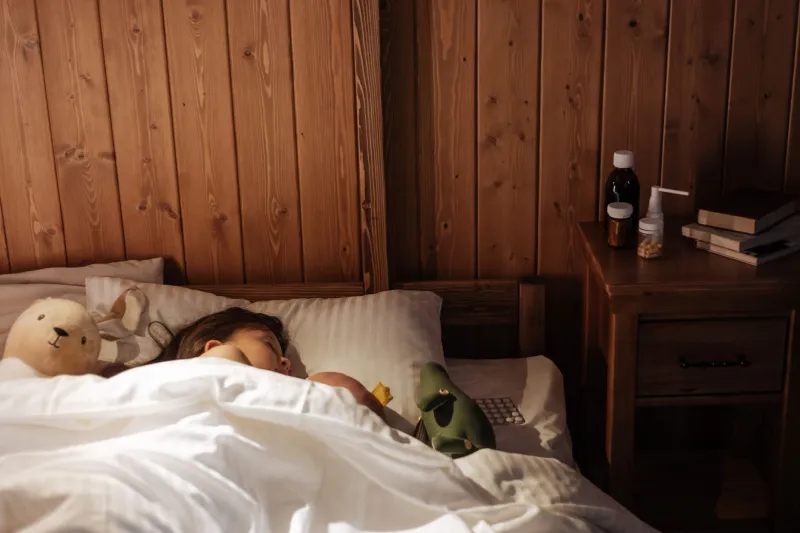
Sleep is far from a passive state. While a child lies still in the dark, the body is engaged in a cascade of restorative processes that no waking activity can replicate. Among the most critical of these is immune system maintenance.
During deep sleep stages, the body ramps up the production of cytokines — proteins that serve as both messengers and soldiers within the immune system. Some cytokines promote inflammation to fight infection, while others regulate the body's response to ensure that inflammation does not spiral out of control. Sleep also drives the production of T-cells, the immune system's specialized fighters that identify and destroy virus-infected cells.
Research published in leading pediatric health journals has demonstrated that children who consistently receive less sleep than recommended for their age group show measurably reduced immune response. In one widely cited study, individuals who slept fewer than seven hours per night were nearly three times more likely to develop a cold after exposure to a rhinovirus than those who slept eight hours or more. For growing children whose immune systems are still maturing, the stakes are even higher.
Beyond infection resistance, adequate sleep supports healthy cortisol regulation, blood sugar stability, and cardiovascular function — all of which lay the groundwork for a lifetime of wellbeing.
How Much Sleep Does Your Child Actually Need?
One of the most common misconceptions among parents is that children adapt seamlessly to less sleep over time. In reality, sleep debt accumulates and compounds. The American Academy of Sleep Medicine offers the following evidence-based guidelines:
- Infants (4–12 months): 12–16 hours, including naps
- Toddlers (1–2 years): 11–14 hours, including naps
- Preschoolers (3–5 years): 10–13 hours, including naps
- School-age children (6–12 years): 9–12 hours
- Teenagers (13–18 years): 8–10 hours
These are not aspirational numbers. They represent the minimum range associated with healthy immune, cognitive, and emotional outcomes. Many Westchester families — particularly those with children involved in competitive athletics, extensive extracurricular programs, or demanding academic schedules — will find these benchmarks difficult to meet consistently. That difficulty is precisely why the conversation matters.
Recognizing the Signs of Sleep Deprivation in Children
Unlike adults, who typically become sluggish and irritable when sleep-deprived, children often present with counterintuitive symptoms. A school-age child running on insufficient sleep may appear hyperactive, impulsive, or emotionally volatile rather than visibly tired. This can lead parents and teachers to misattribute the behavior to attention difficulties or anxiety, when the root cause may simply be chronic sleep loss.
Signs worth discussing with your child's pediatrician include:
- Difficulty waking in the morning despite adequate time in bed
- Frequent mood swings, tearfulness, or irritability in the afternoon
- Trouble concentrating on schoolwork or instructions
- Falling asleep in the car or during quiet activities
- Recurring headaches or stomachaches with no clear medical cause
- A pattern of getting sick more frequently than peers
For teenagers, the challenge is compounded by a biological shift in circadian rhythm that naturally pushes their sleep window later — making a 10:00 p.m. bedtime genuinely difficult rather than a matter of discipline. Early school start times in many Westchester districts can place adolescents in a near-impossible position, and advocacy for later start times is a conversation worth having at the district level.
Building a Sleep Routine That Holds Up in Real Life
Knowing that sleep matters is one thing. Protecting it amid the demands of modern family life in Westchester is another. The following strategies are grounded in behavioral sleep science and adapted for the realities of busy households.
Anchor the routine, not just the time. Children's nervous systems respond to predictable sequences of events more reliably than to clock times alone. A consistent pre-sleep routine — bath, quiet reading, brief conversation, lights out — signals the brain to begin winding down regardless of what the day brought. Aim to begin this sequence at the same time each evening, even on weekends.
Treat light as a biological lever. The hormone melatonin, which governs sleep onset, is suppressed by blue-spectrum light emitted by screens. Dimming household lights and removing devices from bedrooms at least 60 to 90 minutes before sleep can meaningfully shorten the time it takes children to fall asleep. Consider charging devices outside of bedrooms as a household norm rather than a punishment.
Protect the bedroom environment. Cool temperatures (between 65 and 68 degrees Fahrenheit is widely recommended), darkness, and minimal noise create the physiological conditions for deep, restorative sleep. White noise machines can be particularly helpful for children in households with ambient noise or younger siblings.
Address bedtime resistance with curiosity, not conflict. Children who resist bedtime are often communicating something — anxiety about the next day, a need for more connection time with parents, or a genuine inability to wind down. Approaching resistance with questions rather than ultimatums often uncovers solvable problems. A brief check-in conversation before lights out can serve as both an emotional release valve and a meaningful bonding ritual.
Model the behavior you want to see. Children are acutely observant. If parents are routinely scrolling phones at midnight or celebrating late nights, the implicit message undercuts explicit instruction. Families that prioritize sleep as a collective value — not just a rule for children — tend to see more sustainable results.
A Note on When to Seek Help
Some sleep difficulties go beyond routine and warrant professional evaluation. Loud or irregular snoring, gasping, or observed pauses in breathing during sleep may indicate obstructive sleep apnea, a condition that is both underdiagnosed and highly treatable in children. Persistent difficulty falling or staying asleep despite good sleep hygiene may reflect an underlying anxiety disorder or other condition benefiting from clinical support.
Westchester families have access to a range of pediatric sleep specialists, behavioral health providers, and community health resources. If sleep problems are affecting your child's daily functioning, please do not hesitate to raise the concern with your pediatrician. Early intervention almost always produces better outcomes than waiting.
Rest as an Act of Care
At its core, prioritizing your child's sleep is an act of love — as deliberate and meaningful as preparing a nutritious meal or attending a school event. In a culture that frequently celebrates busyness and rewards productivity at the expense of rest, choosing to protect the hours of sleep your child needs is a quiet but profound form of advocacy.
At Children of Our Savior Westchester, we are committed to supporting families in making those choices — not through judgment, but through information, resources, and the understanding that every family's circumstances are unique. If you are struggling to establish healthy sleep habits in your home, know that you are not alone, and that help is available.
The investment you make in your child's rest tonight is an investment in their resilience, their health, and their future.