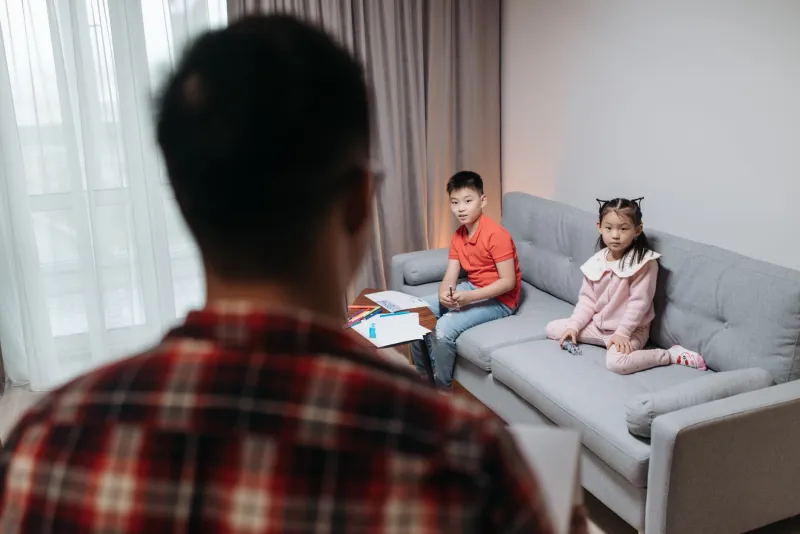
Teaching Children to Speak Up: Building Bodily Confidence and Healthy Boundaries in Westchester Homes
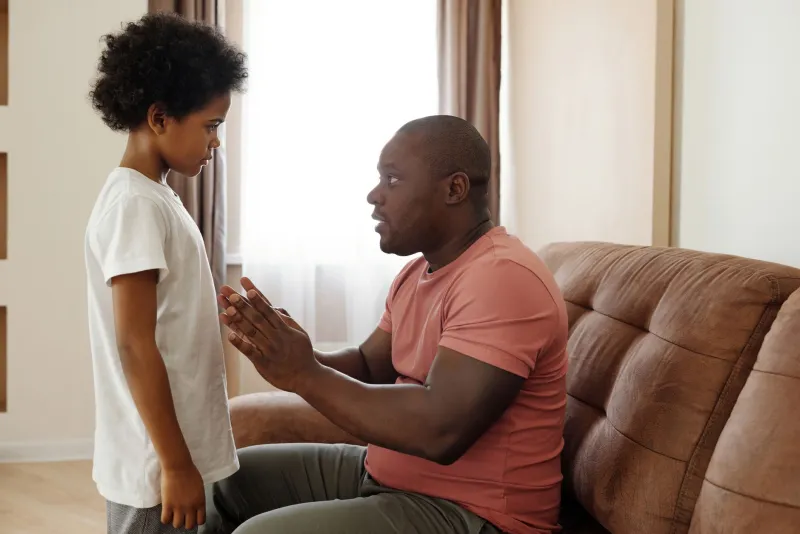
Why Children Stay Silent—and What That Costs Them
Every year, children in communities across the country experience physical discomfort, medical symptoms, or boundary violations that they never report to a trusted adult. Sometimes they lack the vocabulary. Sometimes they have absorbed the message—through family culture, social conditioning, or direct instruction—that their body is not an appropriate topic of conversation. Sometimes they are simply afraid: afraid of being disbelieved, afraid of causing disruption, afraid of the shame that has become attached to anything involving their physical selves.
The consequences of that silence can be significant. Unaddressed medical symptoms worsen. Uncomfortable situations escalate. Children who cannot speak up about their bodies in small ways are far less equipped to speak up when the stakes are higher.
The good news is that the capacity for self-advocacy—the ability to identify, name, and communicate concerns about one's own body and personal space—is not a fixed trait. It is a skill, and it is one that parents can actively cultivate, beginning earlier than most people realize.
Starting With the Right Language
One of the most effective things a parent can do is ensure that children have accurate, matter-of-fact vocabulary for all parts of their bodies from the earliest age. This is not a controversial position in pediatric health—it is a well-supported recommendation from organizations including the American Academy of Pediatrics. Children who know the correct anatomical terms for their bodies are better able to communicate clearly with healthcare providers, better able to describe situations that concern them, and less likely to internalize shame around physical experience.
The way adults use this language matters as much as the language itself. When a parent responds to a child's mention of a body part with discomfort, redirection, or laughter, the child absorbs a lesson: this is not something we talk about openly. Conversely, when a parent discusses the body with the same calm matter-of-factness they bring to a conversation about a scraped knee, they establish a different norm—one in which the body is simply a part of life, and concerns about it are always worth voicing.
Age-Appropriate Conversations About Boundaries
Building a child's capacity for self-advocacy is a gradual, developmental process. Different ages call for different levels of nuance.
Toddlers and preschoolers (ages 2–5): At this stage, the foundational concept is straightforward: your body belongs to you, and you have the right to say no to physical contact that makes you uncomfortable—even from people you love. Teach children that some parts of the body are private (those covered by a bathing suit), that no one should touch those parts without a medical reason, and that they should always tell a trusted adult if someone does. Reinforce that they will never be in trouble for telling the truth about their bodies.
Early elementary (ages 6–9): Children at this age can understand more nuanced ideas about consent, personal space, and the difference between secrets and surprises. They can learn that a trustworthy adult never asks them to keep a secret about their body, and that their feelings about physical situations—even if they cannot explain them—are always worth sharing. Role-playing common scenarios ("What would you do if someone at school touched you in a way that felt wrong?") helps translate abstract concepts into practiced responses.
Tweens and early teens (ages 10–14): As children enter adolescence, conversations about bodily autonomy naturally expand to include topics like physical changes, peer pressure, and the right to decline unwanted physical contact in social situations. At this age, children benefit from explicit conversations about the fact that discomfort is information—that a feeling of unease in a physical situation is not something to be dismissed or pushed through, but something to pay attention to and, when necessary, act on.
Creating a Culture of Open Dialogue at Home
Language and developmental conversations are important, but they work only within a family culture that genuinely supports open communication. Several practical habits help establish that culture.
Honor the small reports. When a young child tells you that something felt weird or uncomfortable—even if the situation seems trivial to an adult—respond with genuine attentiveness rather than reassurance. "I'm glad you told me" is a more powerful response than "Oh, I'm sure it was fine." Children who feel heard on small things are far more likely to come forward on large ones.
Avoid forced physical affection. Requiring children to hug or kiss relatives and family friends, regardless of the child's expressed reluctance, sends a message that contradicts everything you are trying to teach about bodily autonomy. Offering alternatives—a wave, a handshake, a verbal greeting—preserves the child's agency without requiring awkward confrontations.
Normalize healthcare conversations. Children who accompany their parents to medical appointments and observe adults speaking openly with doctors about physical symptoms learn that the body is a legitimate subject of conversation with trusted professionals. Encouraging children to speak directly to their own pediatrician—rather than always deferring to the parent to speak for them—builds the self-advocacy muscle in a safe, structured setting.
Address shame directly. If you notice that a child seems reluctant to discuss a physical concern, it is worth asking gently whether they are worried about getting in trouble or feeling embarrassed. Many children carry shame about their bodies that they have never been given permission to release. A simple, direct statement—"There is nothing about your body that you should ever feel ashamed to talk to me about"—can shift something significant.
When Children Need Additional Support
Some children, particularly those who have experienced medical trauma, boundary violations, or environments where bodily concerns were consistently dismissed, may need more than family conversation to develop confident self-advocacy. School counselors, pediatricians, and licensed child therapists can all play important roles in this work.
Westchester families have access to a range of community resources—through area hospitals, school-based mental health programs, and organizations serving children's welfare—that can provide both guidance and direct support when needed.
The Foundation Beneath Everything Else
Teaching children to speak up about their bodies is not a single conversation. It is an ongoing practice, woven into the fabric of daily family life—in the language we use, the responses we model, and the culture we build at home. Children who grow up in environments where their physical experience is taken seriously, where their voices are trusted, and where no concern about their body is ever too small or too embarrassing to share are not only better protected. They are more confident, more resilient, and better equipped to navigate a world that will frequently ask them to advocate for themselves.
At Children of Our Savior Westchester, we believe that giving children a voice about their own bodies is one of the most enduring gifts a family can offer.